
Digital dentistry is continuously expanding the possibilities of restorative treatment. With advances in additive manufacturing, dental professionals can now explore new approaches for producing customized restorations directly from digital designs.
Permanent 3D printed restorations represent one of the latest developments in this field. Compared with traditional manufacturing methods, dental resin 3D printing offers a digital workflow that connects design, material processing, and restoration production more efficiently.
However, successful clinical application requires a clear understanding of materials, indications, and limitations. For professionals considering a resin 3D printer for dental applications, evaluating material performance and workflow compatibility is essential.
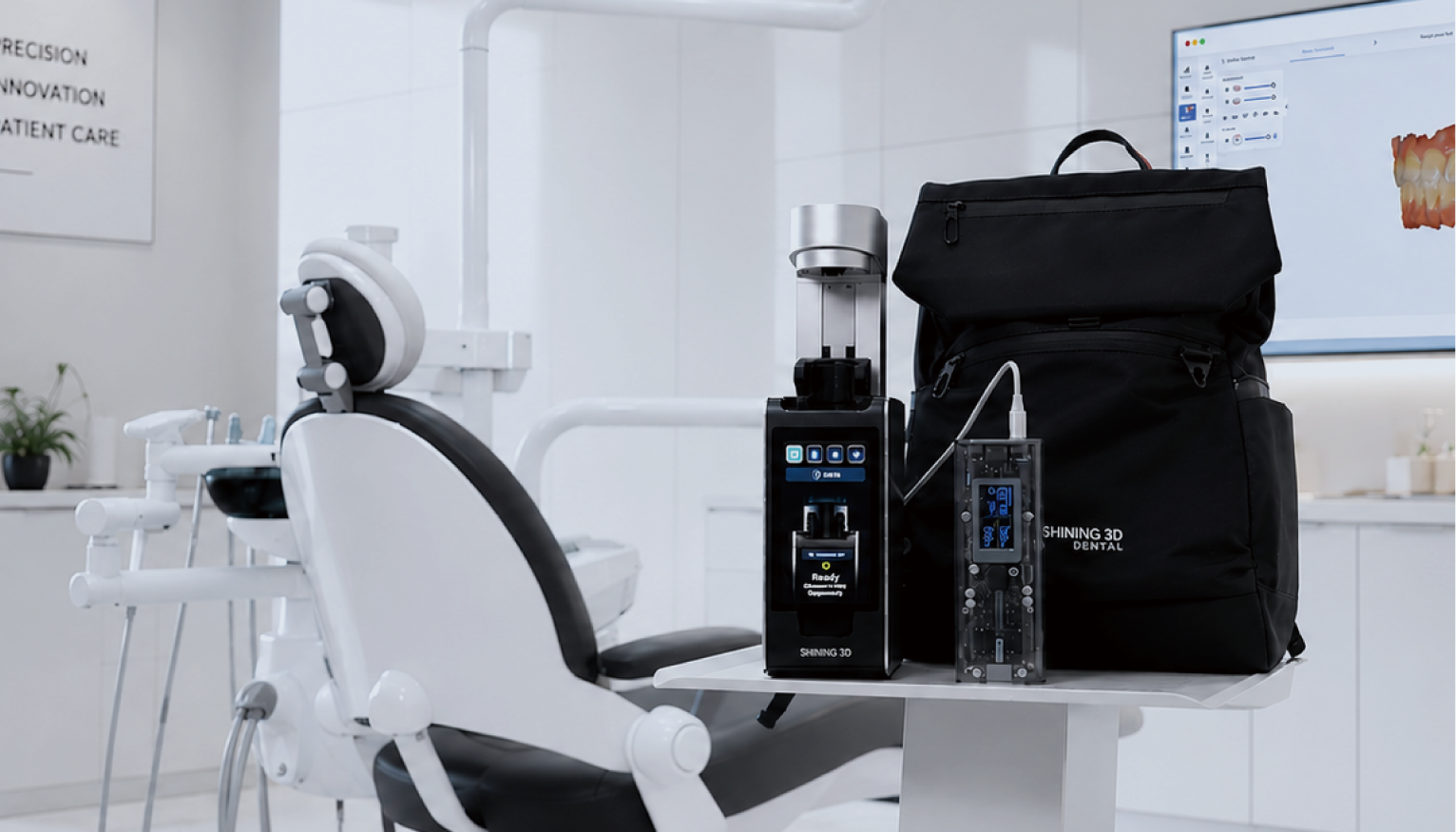
SHINING 3D Dental’s Ceramix-Nano solution is designed for chairside digital restoration workflows. It combines ceramic resin printing and integrated curing technology to support applications such as crowns, bridges, veneers, inlays, and onlays.
What Are Permanent 3D Printed Restorations?
Permanent 3D printed restorations are dental restorations manufactured through additive processes rather than traditional milling or manual fabrication methods.
The workflow begins with digital patient data, usually collected through intraoral scanning. The restoration is then designed using dental CAD software and transferred to a printer for production.
A dental resin 3D printer creates the restoration layer by layer through controlled material curing. After printing, the restoration undergoes necessary post-processing before clinical evaluation and placement.
This approach allows dental teams to create patient-specific restorations while reducing some of the manual steps associated with conventional workflows.
How Permanent Restorations Differ From Temporary Applications?
Not all dental prints have the same purpose. Many traditional dental 3D printing applications focus on models, surgical guides, or temporary devices.
Permanent restorations require higher material performance because they must withstand oral conditions, including:
- Repeated chewing forces
- Moisture exposure
- Temperature changes
- Long-term functional demands
Therefore, material selection is one of the most important factors when implementing dental resin 3D printing for restorative applications.
Materials Used for Permanent 3D Printed Restorations
- Ceramic Resin Materials
Ceramic-filled resin is one of the key material categories being developed for permanent printed restorations. These materials combine resin-based printing processes with ceramic components to improve mechanical and aesthetic performance. The goal is to create restorations with properties closer to conventional ceramic dental materials while maintaining the manufacturing advantages of 3D printing.
SHINING 3D Dental’s Ceramix-Nano uses LumiCera ceramic resin capsules designed for permanent ceramic restoration workflows. The system combines ceramic resin printing with an integrated curing process to support chairside production.
- Biocompatible Dental Resins
Biocompatibility is a critical requirement for materials used in dental applications. Restorative materials must meet appropriate safety requirements for oral use.
Dental professionals should evaluate:
- Material certification
- Intended clinical application
- Mechanical properties
- Manufacturer recommendations
Not every resin designed for general 3D printing is suitable for permanent dental restorations.
A dedicated resin 3D printer for dental applications should be paired with materials specifically developed for dental workflows.
Materials for Different Restoration Requirements
- Different restorations may require different material characteristics.
Important factors include:
- Flexural strength
- Wear resistance
- Surface finish
- Color stability
- Long-term durability
For example, veneers may require high aesthetic performance, while posterior restorations may require stronger mechanical properties due to greater chewing forces.
- Indications for Permanent 3D Printed Restorations
2.1 Crowns
Crowns are one of the most common applications explored with permanent dental 3D printing technology.
Digital workflows allow dentists to design customized crowns based on patient-specific anatomy. A printed crown can be produced directly from the digital design, helping reduce production steps.
The Ceramix-Nano solution from SHINING 3D Dental supports permanent crown production through a chairside workflow designed to simplify digital restoration manufacturing.
2.2 Bridges
For suitable cases, digitally manufactured bridges can benefit from streamlined design and production processes.
3D printing enables dental professionals to create complex geometries based on digital treatment plans. However, case selection remains important because bridge restorations experience significant functional forces.
2.3 Veneers, Inlays, and Onlays
Aesthetic restorations such as veneers, inlays, and onlays require accurate reproduction of shape and surface characteristics.
Digital design combined with advanced printing materials can help improve customization and production efficiency.
According to SHINING 3D Dental, Ceramix-Nano supports permanent ceramic restorations including veneers, inlays, and onlays.
Benefits of Dental Resin 3D Printing for Restorations
- Faster Digital Workflows
One of the main advantages of dental resin 3D printing is workflow efficiency. Digital files can move directly from design software to manufacturing equipment, reducing communication delays.
For chairside applications, this can support faster treatment workflows and fewer patient visits.
- Customized Production
Each restoration is designed according to individual patient anatomy. Digital manufacturing allows dental teams to adjust designs precisely according to clinical requirements.
This personalized approach supports modern restorative dentistry by improving flexibility compared with standardized production methods.
- Reduced Dependence on External Manufacturing
A resin 3D printer for dental applications allows clinics to bring selected manufacturing processes closer to the patient.
By producing suitable restorations internally, dental teams can improve control over production schedules and reduce reliance on external laboratories for certain cases.
Limitations of Permanent 3D Printed Restorations
- Material Performance Considerations
Although dental printing technology continues to improve, material limitations remain an important consideration.
Restorations must demonstrate sufficient strength, durability, and stability for long-term oral use. Not every clinical situation is suitable for printed restorations.
Dentists should follow material guidelines and evaluate whether a specific restoration type matches the material’s intended application.
- Case Selection Requirements
Permanent 3D printing is not a universal replacement for all restorative techniques.
Factors that influence suitability include:
- Restoration location
- Occlusal conditions
- Patient habits
- Functional requirements
- Clinical expectations
Careful case selection helps achieve predictable outcomes.
- Need for Proper Workflow Management
Successful implementation requires more than purchasing a printer. Dental teams need knowledge of digital design, printing parameters, post-processing, and quality control.
A complete workflow should include:
- Accurate scanning
- Proper design procedures
- Correct printing settings
- Appropriate curing processes
- Final clinical evaluation
Without proper workflow management, even advanced equipment may not achieve expected results.
SHINING 3D Dental Ceramix-Nano and Permanent Restoration Workflows
SHINING 3D Dental focuses on digital dentistry solutions that connect scanning, design, and manufacturing technologies. The Ceramix-Nano solution is developed for chairside ceramic restoration workflows, combining Adaptive Pneumatic Stereolithography technology with integrated curing capabilities.
The system uses capsule-based ceramic resin materials and supports permanent restoration applications such as crowns, bridges, veneers, inlays, and onlays. By integrating printing and curing functions, it aims to simplify the production process for dental professionals.
For clinics evaluating dental resin 3D printer solutions, integrated systems like Ceramix-Nano demonstrate how digital manufacturing is moving toward more efficient chairside restoration workflows.
How to Evaluate a Dental Resin 3D Printing Solution?
Before adopting permanent restoration printing technology, dental professionals should consider:
- Material Compatibility
The printer and resin system should support the intended clinical applications and meet relevant requirements.
- Workflow Efficiency
A practical system should integrate smoothly with existing scanning and design processes.
- Clinical Reliability
Consistent results depend on printer performance, material quality, and standardized operating procedures.
- Future Expansion
Clinics should consider whether the system can support additional applications as digital dentistry continues to develop.
Conclusion
Permanent 3D printed restorations represent an important development in digital dentistry, offering new possibilities for customized and efficient restorative workflows.
For professionals considering dental resin 3D printing, understanding materials, indications, and limitations is essential. While technologies continue to advance, careful case selection and proper workflow management remain critical for achieving reliable results.
With solutions such as SHINING 3D DENTAL‘s Ceramix-Nano, dental professionals can explore integrated resin 3D printer for dental workflows designed to support modern restorative applications while improving efficiency and customization.
