
Livestock tracking equipment operates differently from many conventional IoT devices. Animals may move continuously across grazing fields, farms, and other agricultural areas, making device size, installation method, and communication capability important considerations.
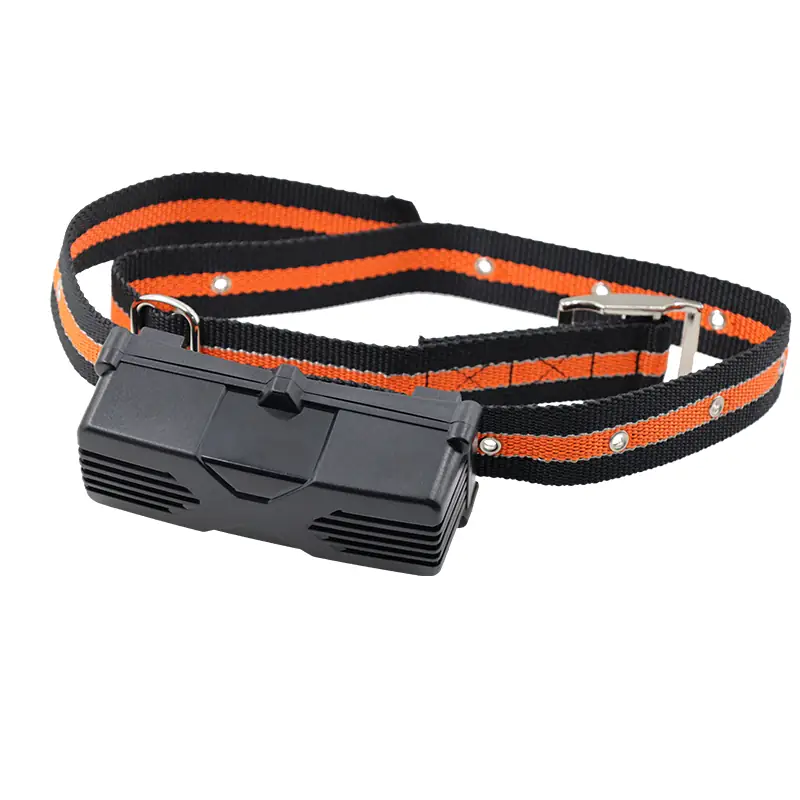
A lorawan animal tracker needs to integrate its functions into a structure that is suitable for attachment to livestock. The HKT-GAT-100 adopts a compact form factor and collar-based design, allowing businesses to install the device directly on animals without additional cables.
This structure helps simplify deployment while providing a practical foundation for location monitoring. For agricultural operators managing different livestock groups, a straightforward installation method can also make daily device management easier.
Compact Collar Structure for Flexible Deployment
The physical design of a livestock tracker can influence how efficiently it is adopted across a farm or ranch. Devices that require complicated mounting processes may increase the workload involved in deploying monitoring equipment across a large herd.
The HKT-GAT-100 uses a collar-based installation structure designed for livestock applications. Its cable-free configuration reduces the need for additional wiring and allows the tracking unit to remain integrated with the animal’s collar during normal movement.
This approach is suitable for cattle and sheep management scenarios. Businesses can deploy tracking devices according to herd size and operational requirements, creating a more organized framework for collecting location information from individual animals.
Integrating GPS Positioning With LoRaWAN Connectivity
Livestock tracking depends on more than physical installation. The device also needs a suitable method for collecting location information and transferring it to a management system.
The HKT-GAT-100 combines GPS positioning with LoRaWAN wireless communication. It collects location information from livestock and transmits the data through compatible LoRaWAN gateways according to configured operating settings.
This architecture provides businesses with a wireless method for accessing livestock location data across distributed agricultural environments. Compared with systems that depend entirely on direct local access, connected tracking can support more flexible information management.
The device can also be configured wirelessly through the network server, allowing users to adjust relevant settings remotely. This capability can reduce the need to physically access every tracking unit during routine system management.
Battery-Oriented Design for Remote Operations
Battery management is another important consideration for livestock tracking deployments. When devices are installed across large grazing areas, frequent battery replacement can create additional work for farm personnel.
The HKT-GAT-100 incorporates a built-in lithium-ion battery designed for long-term livestock tracking applications. According to its product information, the device can operate continuously for more than one year without battery replacement under suitable conditions.
This battery-oriented design helps reduce routine maintenance requirements and supports longer deployment periods. For agricultural businesses managing animals across remote or widely distributed areas, reducing the frequency of direct device maintenance can contribute to more efficient monitoring workflows.
Supporting Remote Livestock Information Management
A tracking solution becomes more useful when location information can be incorporated into broader livestock management processes. Instead of relying only on periodic visual observation, businesses can use connected devices to obtain information from animals across different areas.
The lorawan animal tracker can provide a foundation for collecting livestock location data and supporting management functions such as geofencing and herd counting assistance. These capabilities can help operators understand where animals are located and identify situations that require further attention.
Remote access also gives agricultural businesses greater flexibility when managing devices. With wireless configuration and LoRaWAN connectivity, relevant settings can be managed through the network infrastructure without requiring constant physical contact with individual tracking units.
Building Tracking Systems for Different Herd Sizes
Livestock operations vary considerably in scale and management practices. A small farm may track a limited number of animals, while larger agricultural businesses may need to monitor livestock across multiple grazing areas.
A lorawan animal tracker can serve as a building block for these different deployment models. Businesses can determine the number of devices, gateway locations, and monitoring workflows according to their operational environment.
The HKT-GAT-100 supports applications involving cattle and sheep, providing a flexible option for organizations developing connected livestock management systems. Its compact structure, wireless communication, and long-term battery design can work together to support practical field deployment.
Connecting Livestock Tracking With Smarter Agriculture
Digital livestock management requires hardware that can fit naturally into existing agricultural operations. Location tracking, wireless connectivity, battery performance, and installation convenience all influence how effectively a monitoring system can be implemented.
The HKT-GAT-100 provides a practical combination of GPS positioning and LoRaWAN communication within a livestock-oriented form factor. By reducing the dependence on cables and enabling wireless data transmission, the device can help businesses establish more connected livestock monitoring workflows.
For agricultural operators looking to improve visibility across cattle and sheep management, this type of tracking technology provides a foundation for gradually developing more digital and data-driven operations.
Improving Livestock Visibility Through Connected Tracking
Modern livestock management increasingly depends on timely information about animal location and movement. A suitable tracking device can help businesses organize this information while reducing the workload associated with continuous manual observation.
The HKT-GAT-100 is designed around these practical requirements, combining a collar-based structure, GPS positioning, LoRaWAN connectivity, and a long-lasting built-in battery. Its design supports businesses seeking a straightforward approach to remote livestock tracking and device management.
Through its livestock monitoring solutions, HKT LORA provides connected technologies that help agricultural businesses build more efficient and flexible livestock management systems.
