
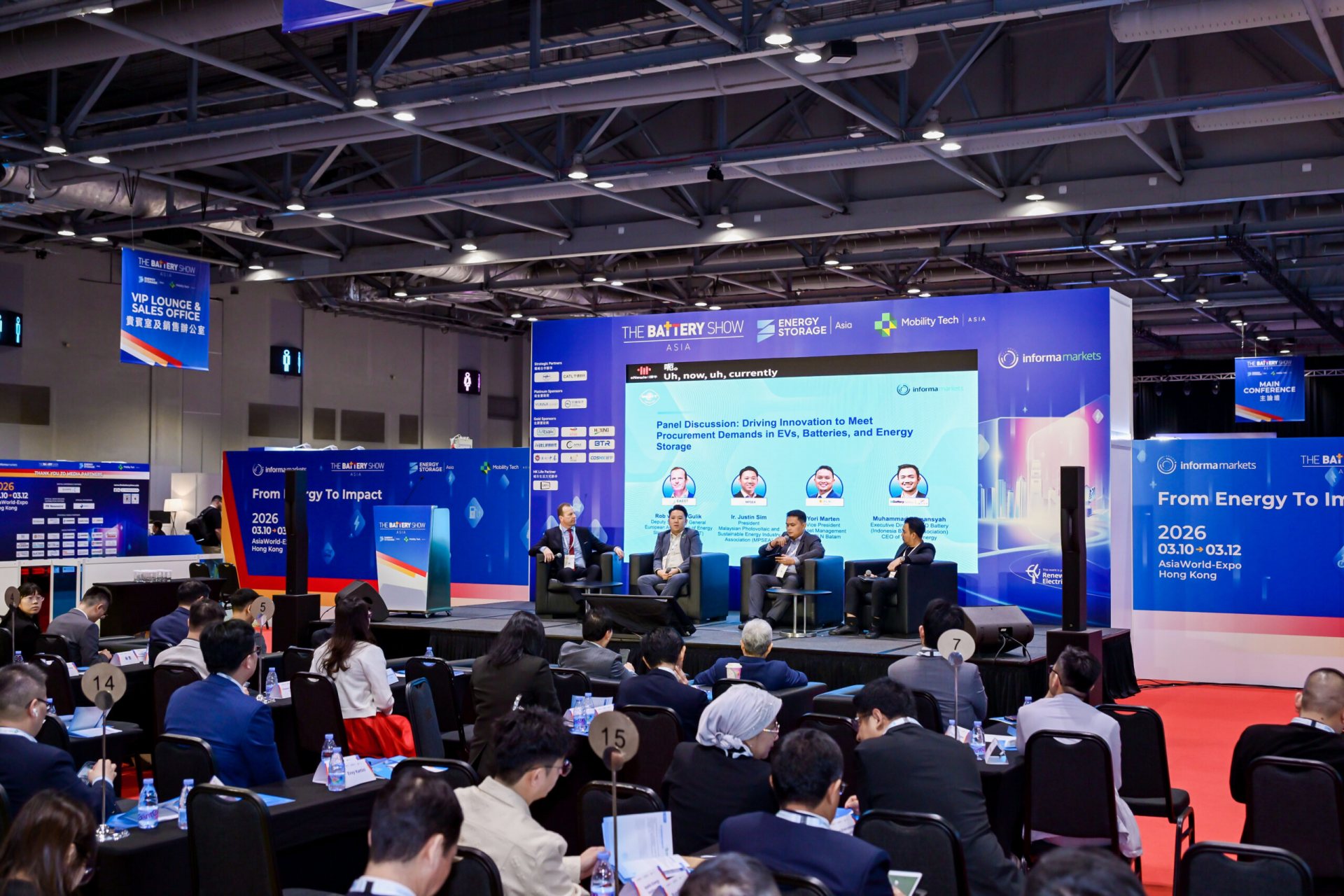
The transition toward sustainable mobility depends on more than replacing combustion engines with electric powertrains. Battery performance, manufacturing efficiency, charging infrastructure, vehicle integration, recycling, and energy management all influence whether new mobility systems can achieve greater efficiency and lower environmental impact.
A battery technology expo brings these interconnected technologies into one professional environment. By connecting battery manufacturers, mobility companies, equipment suppliers, engineers, and energy specialists, such events help the industry examine how advances across the battery value chain can contribute to more sustainable transportation.
Battery Innovation Shapes Sustainable Mobility
Battery technology directly affects the practicality of electric and hybrid mobility. Energy density, charging capability, durability, safety, thermal behavior, and manufacturing consistency all influence vehicle design and operating performance.
The Battery Show Asia covers advanced battery products and technology, battery design and development, battery manufacturing and supply chain, equipment and digitalization, and battery recycling. This broad scope reflects the increasingly connected relationship between battery innovation and mobility applications.
A battery technology expo can therefore provide engineers with more than individual product information. It offers an opportunity to compare developments across materials, cells, manufacturing processes, testing technologies, and end-use applications.
From Battery Cells to Vehicle Systems
Sustainable mobility requires battery technologies to work effectively within complete vehicle systems. Battery packs must interact with battery management systems, power electronics, electric motors, thermal management, charging equipment, and vehicle control technologies.
Mobility Tech Asia, which operates alongside The Battery Show Asia, covers electrification and hybrid powertrain systems, charging and energy infrastructure, smart systems and digital solutions, and new energy mobility applications. Its target audience includes vehicle manufacturers, Tier 1 suppliers, powertrain integrators, infrastructure operators, and mobility technology companies.
This cross-industry approach is valuable because system performance depends on how individual technologies operate together rather than on battery specifications alone.
Charging Infrastructure Is Part of the Transition
Electric mobility cannot scale without suitable charging infrastructure. Vehicle batteries, charging systems, energy management platforms, and electrical networks increasingly need to operate as connected systems.
The Mobility Tech Asia platform covers charging infrastructure, battery swapping, energy infrastructure, electrification and powertrain technologies, and intelligent transportation solutions. Such integration reflects the broader transition from vehicle electrification toward interconnected mobility and energy ecosystems.
This is an important consideration at the battery exhibition because charging technology can affect vehicle usability, fleet operations, infrastructure investment, and energy demand. Understanding these connections allows buyers to evaluate technologies according to complete application requirements.
Battery Recycling Supports a Circular Industry
Sustainable mobility also depends on what happens to batteries after their initial vehicle application. Recycling, material recovery, refurbishment, and second-life applications can influence the long-term resource efficiency of battery systems.
Battery recycling is an explicit technology category at The Battery Show Asia, covering raw-material recovery, battery renewal and refurbishment, second-life batteries, and circular-economy solutions.
The event’s 2026 conference program also featured a dedicated track on “Battery Recycling and Sustainable Development.” Topics included recycled battery materials, battery recycling business models, intelligent battery disassembly, and circularity and supply-chain resilience.
These subjects connect sustainability with practical commercial and engineering decisions across the battery lifecycle.
Manufacturing Efficiency Influences Sustainability
Sustainable mobility does not begin when a vehicle reaches the road. Battery manufacturing processes can also influence resource use, production efficiency, quality, and the scalability of electrification.
The Battery Show Asia includes manufacturing equipment, battery assembly and packaging equipment, testing and certification, battery performance and safety testing, simulation, and digitalization.
These technologies can help manufacturers examine production from a broader perspective. Better process control and testing can contribute to consistent battery quality, while digital and automated manufacturing technologies can provide greater visibility across production operations.
For mobility companies, improvements upstream in battery manufacturing can ultimately affect the reliability and commercial viability of vehicle platforms.
Energy and Mobility Are Becoming More Connected
The sustainability discussion increasingly extends beyond vehicles themselves. Electric transportation interacts with electricity generation, storage, charging infrastructure, and energy management. This creates a closer relationship between mobility and the wider energy system.
The Battery Show Asia brings together battery technology, energy storage, power and energy, and new energy mobility within its event ecosystem. Its 2026 edition featured more than 200 exhibitors showcasing over 1,000 technologies and products across areas including advanced batteries, storage systems, charging infrastructure, electric and hybrid power solutions, and new-energy mobility.
This combination allows industry professionals to examine opportunities at the intersection of transportation and energy rather than treating them as separate markets.
A Battery Conference Adds Industry Perspective
Technology exhibitions provide direct exposure to products, while conference sessions can help explain the market conditions surrounding those technologies.
The 2026 event delivered 147 high-level sessions featuring 132 industry leaders and technical experts. Discussions addressed battery breakthroughs, energy storage solutions, e-mobility technologies, market trends, policy developments, and technology innovation.
The 2026 program also included a plenary session focused on sustainable growth in global battery technology, energy storage, and e-mobility. A dedicated electric vehicle technology and innovation summit further connected battery developments with mobility applications.
Such content helps decision-makers place individual technologies within broader industry and regulatory developments.
Why The Battery Show Asia Matters
The Battery Show Asia provides a platform where different parts of the sustainable mobility ecosystem can be evaluated together. Its international participation adds another dimension, with the 2026 event attracting 15,367 professional buyers from 103 countries and regions. International buyers represented 62.1% of the audience.
The event also welcomed more than 100 international buyer groups and connected companies across battery manufacturing, energy storage, charging, mobility, and related technologies.
The next edition is scheduled for July 14–16, 2027, at AsiaWorld-Expo in Hong Kong, alongside Energy Storage & Power Asia and Mobility Tech Asia. The organizer expects more than 25,000 qualified professionals and buyers across major international markets.
Technology Exchange Can Accelerate Sustainable Mobility
The role of a battery technology expo extends beyond displaying new cells or battery packs. It creates a setting where manufacturers, engineers, mobility companies, infrastructure providers, and technology specialists can examine the relationships between batteries, vehicles, energy systems, manufacturing, and recycling.
Sustainable mobility ultimately depends on progress across this entire ecosystem. Through technology discovery, technical discussion, international collaboration, and supply-chain connections, The Battery Show Asia provides a practical platform for understanding how battery innovation can contribute to a more connected, efficient, and sustainable future for mobility.
