
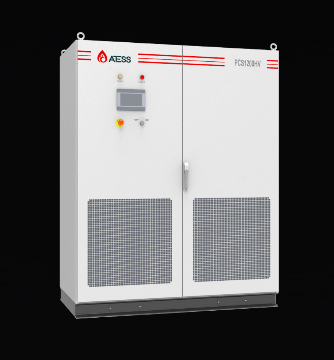
Some engineers assume a bidirectional inverter and a standard solar inverter operate in nearly identical ways—an assumption that often leads to sizing errors and missed performance targets. Atess manufactures bidirectional battery inverters covering 100kW to 1500kW, purpose‑built for industrial, commercial, and grid‑level energy storage scenarios. These systems manage charging and discharging while converting AC to DC and DC to AC across both directions. A battery inverter from Atess serves as the core energy management and conversion unit within larger storage architectures, yet several persistent myths continue to surface during project specification.
Myth 1: A battery inverter works without a battery
One recurring question asks whether a bidirectional inverter can operate when no battery is attached. Atess clarifies that a battery inverter cannot function without a battery because its primary role is to convert DC from an energy storage bank into usable AC power for loads. Without a connected battery, there is no DC source for the inverter to draw from, and the system simply does not start. Some speculators mistakenly assume the unit can operate in a grid‑tied mode like a solar inverter, but that is not the intended design.
Myth 2: A bidirectional inverter only serves backup power
Another misconception treats the bidirectional inverter as a pure backup device that sits idle until a grid failure occurs. In reality, Atess units actively manage multiple functions: charging batteries from AC sources (grid or generator), discharging stored energy to offset peak demand, supporting load shifting, and contributing grid support functions such as frequency regulation and peak shaving. The battery inverter works continuously, not just during emergencies.
Myth 3: Efficiency is inherently poor under light loads
Some technical literature suggests a bidirectional inverter suffers from limited light‑load efficiency because most topologies were designed for maximum power operation in commercial buildings or data centers. While that observation holds true for older designs, Atess engineers have addressed this concern through optimized control strategies and component selection suited to real‑world load profiles. Performance under partial load conditions depends heavily on implementation rather than the bidirectional architecture itself.
Clearing up these three myths about the bidirectional inverter helps engineers avoid misapplication. Atess units from 100kW to 1500kW demonstrate that a properly specified battery inverter offers far more than backup power—it delivers continuous energy management, supports grid stability, and performs efficiently across varying load conditions when designed correctly.
