
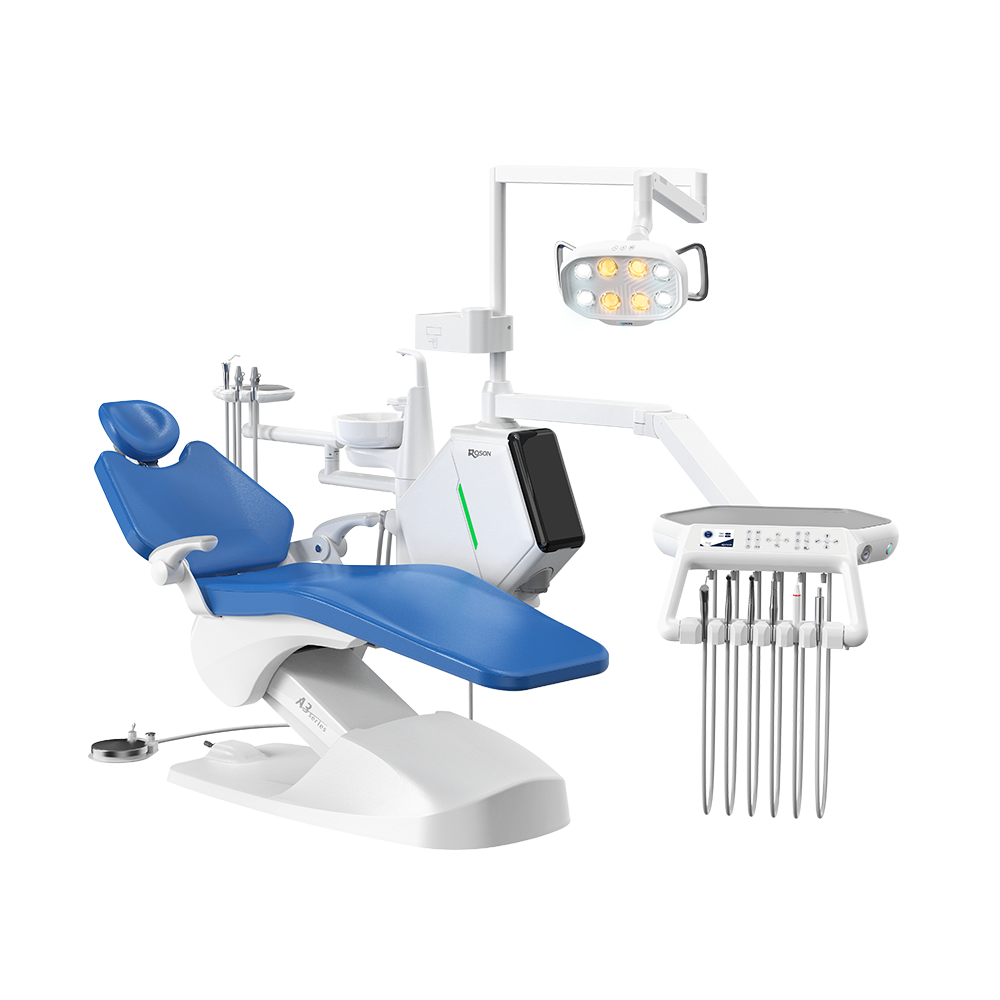
Dental clinics must carefully evaluate equipment requirements before investing in treatment systems. A properly designed dental workspace depends on reliable technology, safe operation, efficient workflows, and equipment that supports professional treatment standards.
Understanding dental chair and unit requirements helps clinic owners, distributors, and procurement teams make better purchasing decisions. Instead of focusing only on appearance or individual functions, buyers should consider how equipment design affects hygiene control, operator efficiency, patient comfort, and long-term maintenance.
A complete treatment system should integrate mechanical performance, clinical usability, and safety considerations. Roson develops dental equipment solutions designed around practical clinical needs, with features that support modern treatment environments.
Understanding Core Dental Units Requirements
Evaluating Dental Units Requirements Before Purchase
Meeting dental units requirements begins with understanding the role of each component within a treatment room. A dental unit is not simply a patient chair combined with instruments; it is a connected working system that includes delivery structures, control systems, lighting, water management, and assistant support functions.
For dental clinics, equipment selection should start with workflow analysis. Dentists need convenient access to handpieces, instruments, and controls without unnecessary movement. Poorly planned equipment layouts may increase treatment time and create physical strain for operators.
Important evaluation points include:
Accessibility of instruments during procedures
Stability of chair movement systems
Ease of cleaning and maintenance
Integration between dentist and assistant positions
Compatibility with clinic space planning
Modern systems should also support infection prevention practices. Surfaces should be easy to maintain, and water-related components should be designed to reduce contamination risks. Equipment with organized drainage and flushing functions can simplify daily cleaning routines.
Key Design Elements For Dental Chair And Unit Performance
Selecting The Right Dental Chair And Unit Configuration
The design of a dental chair and unit directly influences both patient experience and dentist productivity. A suitable system should provide comfortable positioning while allowing practitioners to maintain proper ergonomic posture during different procedures.
Chair movement is one of the most important factors. Smooth adjustment, stable positioning, and memory functions can help dentists quickly adapt the chair for examinations, restorative procedures, and other treatments.
Another consideration is control flexibility. Digital interfaces can help operators monitor equipment status and adjust settings more efficiently. For example, modern dental systems may include medical-grade displays, self-check functions, and customizable chair positions to improve daily operation.
Roson integrates practical features into dental treatment solutions, including ergonomic designs, adjustable instrument positioning, and smart operation functions that support different clinic workflows.
Hygiene And Safety Considerations In Equipment Selection
How Dental Units Requirements Support Infection Control
Hygiene is one of the most important factors when reviewing dental equipment. Dental clinics must manage risks related to waterlines, surfaces, and instrument handling.
A suitable system should make routine cleaning procedures easier. Features such as automatic flushing functions, controlled water delivery, and integrated disinfection solutions can improve consistency in daily maintenance.
When reviewing suppliers, buyers should examine whether equipment design supports practical infection control rather than relying only on marketing claims. Documentation, maintenance guidance, and clear operating procedures are valuable indicators of product reliability.
Safety features are also essential. Anti-collision mechanisms, stable mechanical structures, and reliable electrical components can reduce operational problems and improve workplace safety. The Roson A3 series, for example, includes features such as anti-collision protection, digital control functions, and cleaning-support systems designed for clinical environments.
Quality Evaluation For Global Dental Equipment Buyers
Reviewing Dental Chair And Unit Manufacturing Standards
For distributors and international buyers, equipment quality depends heavily on manufacturing consistency. Before selecting a supplier, businesses should review production capabilities, technical support, customization options, and quality management processes.
A professional manufacturer should provide stable product performance across different orders. This is especially important for dental groups and distributors that need reliable equipment supply for multiple projects.
Buyers should also consider:
Availability of replacement parts
Technical training support
Warranty policies
Customization possibilities
Long-term supplier cooperation
A well-established manufacturing partner can help reduce installation difficulties and improve customer satisfaction after delivery.
Practical Checklist Before Purchasing Dental Equipment
Before finalizing an order, clinics and distributors can use a practical checklist:
Confirm whether the equipment fits the treatment room layout.
Evaluate operator comfort and patient positioning options.
Review cleaning and maintenance procedures.
Check available configuration choices.
Understand technical support and service conditions.
Compare long-term operating value rather than only purchase cost.
Following these steps helps buyers avoid equipment choices that create workflow limitations in the future.
Roson continues to provide dental equipment designed for professional applications, combining functional design with customization possibilities to meet different market needs.
Conclusion
Selecting compliant dental equipment requires a comprehensive understanding of clinical workflow, hygiene expectations, safety considerations, and operational efficiency. Dental chair and unit requirements should be evaluated as part of a complete treatment environment rather than as separate equipment features.
By carefully analyzing design, functionality, and supplier reliability, dental clinics can choose systems that support better treatment quality and long-term business development. The right equipment investment improves daily efficiency while creating a more comfortable experience for both dental professionals and patients.
