
Battery manufacturing demands electrical connections that remain stable despite vibration, temperature changes, and repeated charge-discharge cycles. The quality of these joints influences current flow, thermal behavior, and long-term battery reliability. Effective EV battery welding requires careful control of heat input and joint consistency, particularly as manufacturers work with delicate cells, conductive tabs, busbars, and dissimilar metals. A connection that appears sound on the outside may still contain excessive resistance or hidden defects that affect pack performance.
Electrical Connections and Battery Performance
Inside a battery pack, cells must be connected in a configuration that meets the required voltage and current capacity. Welded joints connect tabs, terminals, and busbars while keeping electrical resistance low enough to limit unnecessary heat generation. Poor connections can create localized hot spots, voltage drops, or intermittent faults, making joint quality an important consideration in battery safety and performance.
Different battery designs call for different joining methods. Cylindrical cells, prismatic cells, and pouch cells have distinct terminal layouts and mechanical constraints, so the welding process must suit the contact area and component structure. Engineers also need to consider the conductivity, thickness, and coating of each material before setting process parameters.
Production teams may evaluate resistance welding applications when joining conductive components that can be clamped between electrodes. In resistance-based processes, current passing through the joint generates heat, allowing the materials to bond under controlled force. The appropriate process depends on factors such as material combination, component dimensions, required joint strength, and acceptable surface deformation.
Managing Heat and Preventing Joint Defects
Battery components can be sensitive to excessive heat. Uncontrolled energy input may damage thin tabs, distort terminals, affect nearby insulating materials, or create inconsistent weld nuggets. Process development must balance sufficient bonding energy with the need to protect adjacent cell structures, especially where components have limited thermal tolerance.
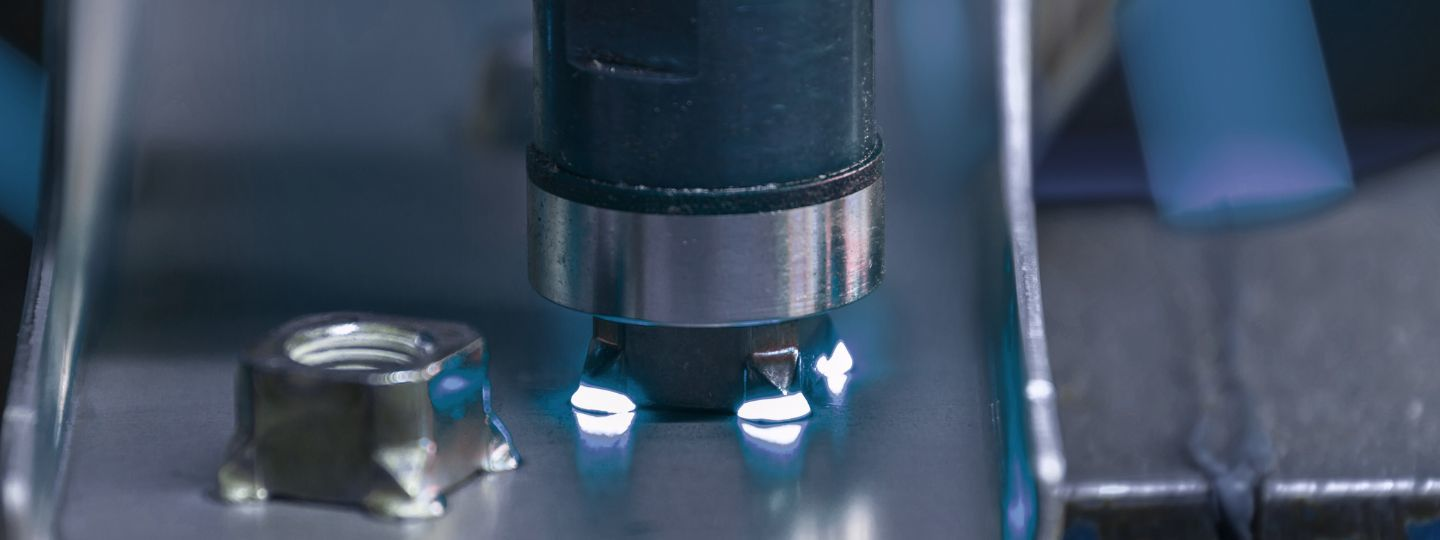
Capacitor discharge welding offers one approach for applications requiring a short, high-energy pulse. Energy stored in capacitors is released rapidly during the weld cycle, which can limit the duration of heat exposure compared with some longer-duration processes. Its suitability still depends on the material combination, joint geometry, and energy required to form a reliable bond.
Quality checks should go beyond visual inspection. Weld appearance can reveal surface irregularities, but destructive testing, resistance measurements, and process monitoring may be needed to assess joint integrity. For EV battery welding, engineers can establish acceptable parameter ranges through trials and then track current, voltage, electrode force, and weld consistency during production.
Selecting a Welding Process for Battery Assembly
No single joining process suits every battery connection. Laser welding, ultrasonic welding, resistance welding, and other methods each offer different benefits depending on the materials and assembly design. Laser systems may suit certain precision joints, while ultrasonic welding can be useful for selected conductive foils and tabs. Resistance-based methods are worth assessing when the parts allow suitable electrode access and a controlled current path.
When resistance welding is considered suitable for a battery component, choosing the control technology becomes another important decision. This comparison of MFDC, MFAC, and capacitor discharge welding controllers explains key operating differences that engineers can consider during equipment selection.
The choice also affects production-line design. Cycle time, fixture access, electrode replacement, automation compatibility, and inspection requirements all influence manufacturing efficiency. A process that creates a strong joint in laboratory trials may perform differently in mass production if part positioning or incoming material quality varies.
During equipment evaluation, manufacturers should test representative battery components rather than relying on general machine specifications. Trials can assess joint strength, electrical resistance, appearance, repeatability, and possible damage to surrounding materials. Clear acceptance criteria also help production engineers compare resistance welding applications across different cell formats and connection designs.
Equipment Integration and Manufacturing Quality
Stable battery production depends on the interaction between the welding machine, tooling, process controls, and component handling system. Fixtures must position parts consistently, while electrode force and current delivery should remain within validated ranges. Monitoring systems can help detect changes in the process before they result in widespread defects or costly rework.
Maintenance planning is equally important. Electrode wear, surface contamination, loose electrical connections, and cooling problems can gradually affect weld consistency. Regular inspection, parameter verification, and documented troubleshooting procedures help technicians identify the source of variation instead of adjusting settings without evidence.
For manufacturers assessing capacitor discharge equipment, Sunke provides industrial resistance welding solutions for applications across manufacturing and electronics. Its equipment range addresses different controller and transformer power requirements according to the welding task. Battery producers can assess suitability through sample testing, reviewing whether the proposed setup supports the required joint dimensions, process repeatability, and production conditions.
Conclusion
Battery reliability is shaped not only by cell chemistry but also by the quality of the connections that carry current throughout the pack. Carefully developed EV battery welding processes help manufacturers manage electrical resistance, protect sensitive components, and maintain repeatable assembly quality.
By comparing joining methods, validating parameters on real parts, and establishing practical inspection routines, production teams can make informed decisions about resistance welding applications without treating every battery connection as the same engineering problem.
