
Mechanical splices depend on a slender cylindrical axis to transfer tension across adjoining belt ends. Fastener wire hooks grip the carcass, but the connecting pin absorbs the combined shear load generated by drive motors and material payload. Misjudging the structural requirements of this central component causes rapid joint separation and costly conveyor downtime.
Operating conditions dictate that a conveyor belt hinge pin must balance conflicting physical properties. It requires adequate transverse stiffness to prevent scalloping between hooks, yet sufficient elastic flexibility to traverse crowned pulleys without permanent set. Balancing these competing mechanical behaviors demands rigorous manufacturing discipline and deliberate material formulation.
Engineering teams developing high-load systems face severe fatigue cycles at every terminal drum. Specifying an appropriate heavy duty hinge pin prevents catastrophic shear rupture when conveyors start under loaded conditions. Pin failure rarely stems from sudden overload, arising instead from progressive fretting and fatigue within interlocking fastener loops.
Articulation Dynamics and Core Shear Requirements
Conveyor articulation subjects hinge components to continuous micro-movements as belts cycle over idlers and wrap drive pulleys. Fastener loops apply point loads across the pin surface, creating severe shear concentrations. Inadequate core ductility results in rapid fatigue cracking right where loop edges press into the metal.
Tension spikes during start-up amplify shear pressure along the joint width. If tensile strength falls below operating limits, the pin yields plastically, developing a corrugated profile that binds adjacent loops. Once binding occurs, the joint loses rotational flexibility, forcing fastener legs to absorb bending stress until they snap.
Troughing transitions introduce compound torsional forces that flat-running belts never encounter. Transition zones from three-roll idlers to flat terminal pulleys bend the pin across multiple planes simultaneously. Pin construction must accommodate these dynamic deflections without suffering internal breakdown or localized necking.
Metallurgy and Core Cable Architecture
Choosing between solid spring wire and stranded aircraft cable forms the primary design decision in pin manufacturing. Solid high-carbon spring wire provides superior transverse rigidity, preventing loop collapse under high belt tension. Solid cores resist multi-plane flexing, restricting their practical use to flat conveyors with generous pulley diameters.
Stranded cable cores resolve flex fatigue through multi-wire rope constructions, typically featuring nineteen or seven-strand geometries. Utilizing a stranded conveyor belt hinge pin allows smooth passage over miniature pulleys, nose bars, and crowned drums. Individual wire filaments slide past one another under flexure, dissipating cyclic stresses that shatter solid rods.
Alloy selection governs performance across corrosive or high-temperature industrial environments. Galvanized carbon steel delivers exceptional tensile yield in dry distribution centers, whereas marine or washdown environments demand 304 or 316 stainless steel. Fastener specialists at Intake engineer core wire alloys to resist hydrogen embrittlement and stress cracking during continuous operation.
Internal friction between braided wires generates microscopic heat during dynamic running. Quality manufacturers introduce specialized lubricants inside the strand bundle before finalizing the outer jacket. Internal lubrication suppresses fretting corrosion between strands, extending overall cable fatigue life by several million articulation cycles.
Sheathing Technologies and Abrasive Wear Barriers
Direct steel-on-steel contact between fastener loops and raw pin cores accelerates mechanical fretting. Fastener loops act like miniature blades, cutting circular grooves into bare wire over weeks of continuous operation. Grooving weakens cross-sectional shear capacity and locks the joint, making pin extraction nearly impossible during maintenance.
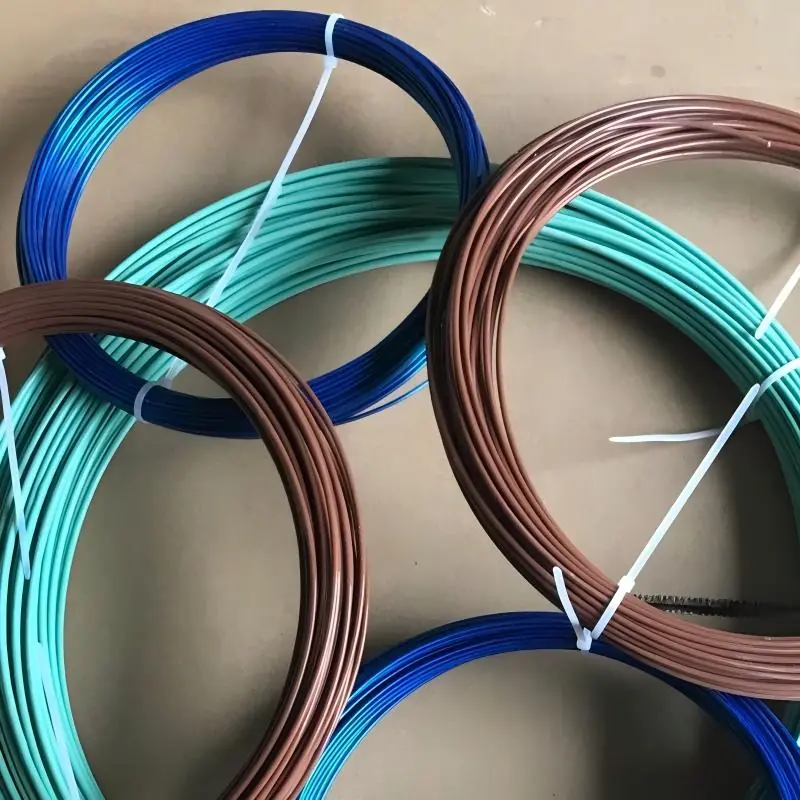
Protective polymer jackets create a sacrificial, low-friction barrier that isolates structural cores from fastener loops. Integrating an armored heavy duty hinge pin equipped with extruded nylon dampens operating chatter and prevents loop gouging. The jacket deforms slightly under dynamic pressure, creating a broader contact surface that distributes mechanical loads uniformly.
Aggressive fine particulates present unique challenges in abrasive quarrying, mining, and cement transport. Hard minerals lodge between bare loops and pins, rapidly grinding steel surfaces down to failure. Technical formulations from Intake feature high-density extruded nylon sheathing that resists abrasive grit penetration, shielding the inner load-bearing cable.
Thermal thresholds dictate coating longevity across demanding process lines. Standard nylon sheaths degrade, soften, or embrittle when exposed to industrial ovens or cold storage facilities. Specialized fluoropolymer coatings maintain mechanical lubricity across extreme thermal spectrums, preventing jacket rupture and subsequent pin seizure.
Dimensional Tolerances and Pin Retention Engineering
Diameter precision directly governs how smoothly mechanical joints transmit power across conveyor beds. Oversized pins generate extreme insertion resistance, distorting fastener loops and tearing nylon jackets during installation. Conversely, undersized pins introduce excessive joint play, causing violent shock loading whenever splices enter the drive wrap.
Pin migration presents a major hazard to conveyor structures and nearby personnel. Lateral forces cause unsecured pins to walk outward across the belt seam during operation. Migrating pins snag conveyor frames, sever sensor wiring, or tear belting covers along the conveyor line.
Retention mechanisms must lock the pin securely while allowing straightforward removal during belt changeouts. Specifying a tailored conveyor belt hinge pin with integrated retaining washers, swaged ends, or pre-formed locking heads guarantees axial stability. Reliable retention holds the pin centered within fastener loops regardless of vibration or belt wander.
Pin Retention Methods and Supplier Quality Control
Demanding heavy-aggregate conveyors frequently deploy notched or crimped retaining collars to withstand lateral surging. Installing an engineered heavy duty hinge pin with matched end fittings eliminates pin ejection risks under violent shock loads. Mechanical retention systems save maintenance teams hours of troubleshooting by preventing unintended pin drift.
Sourcing precision hinge hardware requires auditing a supplier’s drawing tolerances, jacket concentricity, and metallurgical traceability. Global manufacturing partner Intake maintains strict dimensional consistency across solid and stranded pin assemblies. Prioritizing quality pin construction ensures mechanical splices achieve their full design lifespan, safeguarding continuous production across vital material handling facilities.
