
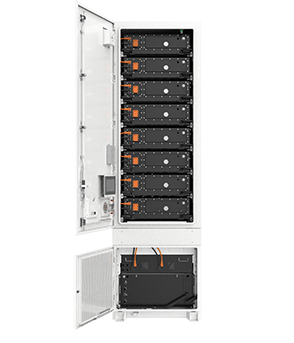
The rapid growth of renewable energy is changing the way electricity is generated and consumed. Solar farms, wind power stations, industrial facilities, and microgrids all face one common challenge: energy generation and energy demand do not always occur at the same time. To improve power quality and make renewable energy more reliable, energy storage has become an essential part of modern infrastructure.
Among various technologies, the containerized battery energy storage system has become one of the most widely adopted solutions for utility-scale and industrial applications. Its modular design, high energy density, and ease of deployment make it suitable for large projects that require flexibility and long-term scalability.
Why Energy Infrastructure Needs Large-Scale Storage
Modern power systems are becoming more decentralized. Renewable energy sources provide clean electricity, but their output depends heavily on weather conditions. This intermittency creates fluctuations that can affect grid stability.
Battery energy storage systems help address these challenges by storing excess electricity and releasing it when demand increases. According to the International Energy Agency, energy storage plays an important role in balancing renewable generation and supporting the transition to low-carbon energy systems.
Compared with traditional backup generators, battery systems respond faster and provide better efficiency. They can be used for peak shaving, frequency regulation, load shifting, and emergency backup power. These functions are becoming increasingly valuable as power grids incorporate more renewable resources.
Understanding the Concept of a Containerized Battery Energy Storage System
A containerized battery energy storage system integrates battery modules, battery management systems, thermal management units, fire protection systems, and control equipment into a standardized container structure.
This integrated design simplifies transportation, installation, and commissioning. Since most components are assembled and tested before delivery, deployment time can be significantly reduced. Standardized containers also allow multiple units to operate together, making future capacity expansion more convenient.
Containerized systems are commonly used in utility-scale renewable projects, commercial and industrial energy storage, off-grid applications, and microgrids. Their flexibility enables EPC contractors and OEM partners to adapt solutions according to project requirements.
Why Liquid Cooling Is Becoming the Mainstream Choice
As battery capacity increases, temperature control becomes more critical. Excessive heat or uneven temperature distribution can affect battery performance and accelerate degradation.
Liquid cooling technology has emerged as a preferred solution because it provides more uniform temperature management than conventional air-cooling systems. Stable operating temperatures improve battery consistency and help extend service life.
This trend has accelerated the adoption of Utility-Scale Liquid-Cooled Containerized BESS platforms. Liquid-cooled systems also offer higher energy density and lower auxiliary power consumption, which contributes to improved overall efficiency.
For projects operating in regions with large temperature variations, liquid cooling provides additional reliability and safety advantages.
How Modular Architecture Improves Scalability
One of the key features of modern energy infrastructure is scalability. Energy demand often changes during the lifecycle of a project. A modular architecture allows additional capacity to be added without replacing existing systems.
Each battery cluster operates independently while remaining connected through intelligent control systems. If maintenance is required, individual modules can be serviced separately, reducing downtime and improving operational availability.
This approach is particularly beneficial for utility operators and system integrators because it minimizes initial investment risks and provides greater flexibility for future expansion.
A Practical Example from Dyness
As a global energy storage technology provider, Dyness focuses on residential, commercial, and utility-scale solutions. The company works closely with distributors, system integrators, and OEM or ODM partners to deliver customized energy storage platforms.
One example is the DH800Y solution. According to official information, the system adopts a liquid-cooled modular architecture and integrates battery modules, intelligent battery management, thermal control systems, and safety protection into a compact container structure.
The design supports high energy density and efficient temperature management, making it suitable for utility-scale applications. Multiple systems can be deployed together to increase energy capacity, providing a flexible foundation for renewable integration, industrial energy management, and grid support projects.
As a Utility-Scale Liquid-Cooled Containerized BESS solution, the DH800Y emphasizes reliability, intelligent operation, and long-term scalability. Its modular structure also simplifies transportation and installation, helping engineering companies reduce project complexity and shorten deployment cycles.
Applications Across Modern Energy Infrastructure
Containerized battery systems are now widely used in renewable energy plants, industrial parks, microgrids, and utility networks. They support peak demand management, improve power quality, and increase the utilization of renewable resources.
In regions where grid stability is limited, energy storage systems also provide backup power and enhance resilience. For large-scale solar and wind projects, battery storage helps smooth power fluctuations and improve dispatchability.
As electricity systems continue to evolve, storage technologies are becoming a key component of energy infrastructure rather than simply an auxiliary device.
Looking Ahead
The transition toward clean energy is creating new requirements for flexibility and reliability. Utility operators and industrial users need energy storage platforms that are efficient, scalable, and easy to deploy.
A containerized battery energy storage system answers these demands through integrated design and modular architecture. Combined with advanced liquid cooling technologies, Utility-Scale Liquid-Cooled Containerized BESS solutions are helping build smarter and more resilient power systems.
For OEM and ODM partners seeking adaptable solutions, containerized energy storage platforms provide a practical pathway to support future energy development while maintaining operational efficiency and long-term reliability.
