
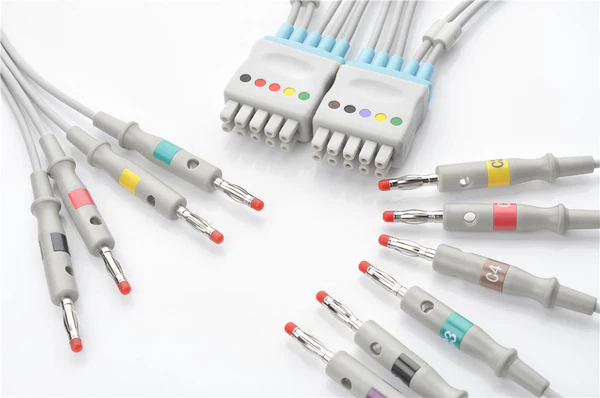
In modern healthcare environments, reliable signal transmission is essential. As a professional medical device cable manufacturer, Unimed focuses on designing high-performance medical device cables that minimize electromagnetic interference. Shielding plays a critical role in protecting sensitive signals from external noise while preventing emissions that could affect nearby equipment.
Cables are often the most exposed part of a medical system, making them vulnerable to electromagnetic disturbances. Effective shielding ensures that diagnostic data, monitoring signals, and therapeutic outputs remain stable and accurate.
Standards Guiding Shielding Effectiveness Testing
Testing and validation of shielding performance must align with recognized international standards. The widely adopted IEC 60601 series addresses safety and electromagnetic compatibility requirements for medical electrical equipment.
For shielding-specific evaluation, IEC 62153-4-3 defines methods to measure cable screening effectiveness. This standard evaluates how well a cable resists conducted electromagnetic interference, helping ensure consistent device performance in complex hospital environments.
In addition, EMC testing under IEC 60601-1-2 assesses how cables and devices behave under electromagnetic stress, focusing on both emissions and immunity.
Testing Methods and Validation Process
To validate shielding effectiveness, manufacturers apply a combination of laboratory and real-world tests. Precompliance testing is often conducted early using spectrum analyzers to detect interference hotspots.
Formal validation includes measuring signal-to-noise ratio, cross-talk, and attenuation levels. Shielding effectiveness is verified by analyzing how much interference is reduced across different frequencies. Environmental testing is also essential, exposing medical device cables to temperature changes, humidity, and sterilization cycles to confirm durability under clinical conditions.
Proper validation goes beyond a single test phase. It involves material qualification, design verification, and final system-level validation to ensure consistent shielding performance throughout the product lifecycle.
Design Factors Affecting Shielding Performance
Shielding effectiveness depends on multiple design elements. Combining foil and braided shields improves coverage and enhances EMI protection. Proper grounding and 360-degree shield termination are equally important to maintain continuity and reduce leakage.
Material selection also influences performance. Conductive layers, insulation quality, and connector design all contribute to overall shielding capability. A well-designed cable balances flexibility, durability, and electromagnetic protection.
Conclusion
Testing and validation of shielding effectiveness are essential for ensuring the safety and reliability of medical systems. By following established standards and applying comprehensive testing methods, a trusted medical device cable manufacturer like Unimed can deliver dependable medical device cables for critical healthcare applications. Consistent shielding performance not only protects signal integrity but also supports stable operation in increasingly complex electromagnetic environments.
